


Erectile Dysfunction

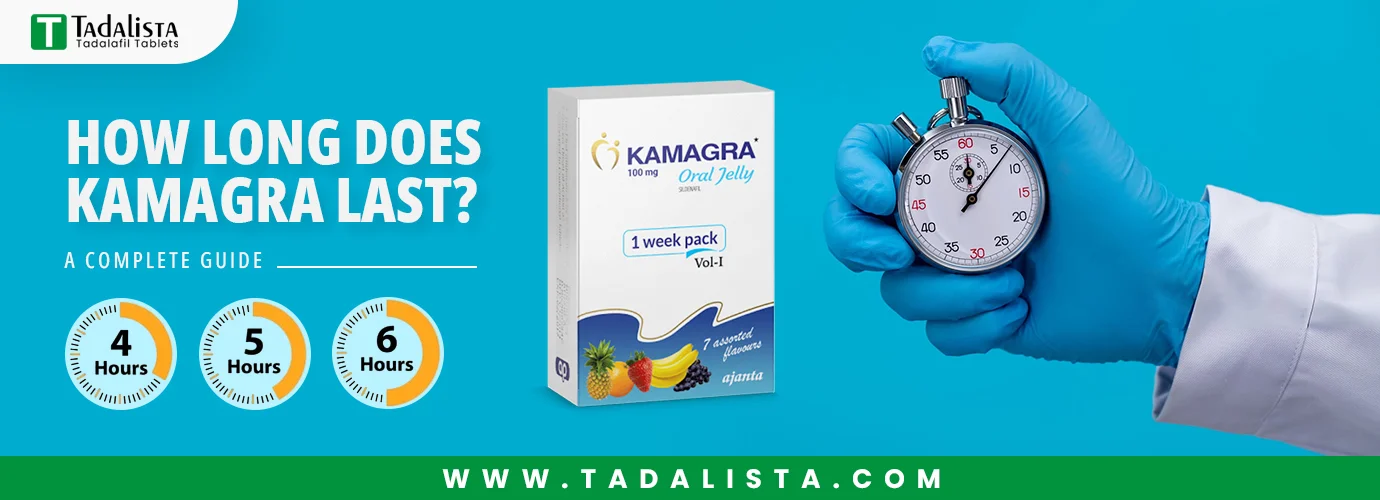
How Long Does Kamagra Last? A Complete Guide

Medically Reviewed By

Dr James M - Male Sexual and Reproductive Health, Urology | Last Reviewed: February 23, 2026

Erectile dysfunction (ED) is a common concern affecting men of all ages. For many, Kamagra offers a solution to restore sexual performance and confidence. If you’re considering Kamagra, knowing how long it lasts is essential to plan its use safely and effectively. In this guide, we’ll explain the timelines, factors, and tips for maximizing the duration of Kamagra’s effects.

What is Kamagra?

Kamagra is an oral medication used to treat erectile dysfunction. Its active ingredient is Sildenafil Citrate, which works by enhancing blood flow to the penis during sexual stimulation. By relaxing the smooth muscles and widening the blood vessels, Kamagra helps men achieve and maintain erections when aroused.

Kamagra comes in different forms:

  • Tablets: Standard form, swallowed with water, commonly used for predictable timing.

  • Chewable tablets: Easier to take, often preferred by those who dislike swallowing pills.

  • Oral jelly: Quickly absorbed, often faster-acting than tablets, suitable for spontaneous use.

A Sildenafil Citrate 100mg tablet typically lasts for 4–6 hours in the body, providing a window for sexual activity. The exact duration may vary slightly depending on factors like metabolism, age, and food intake.

How It Works

Kamagra enhances the body’s natural response to sexual stimulation. During arousal, the body releases nitric oxide, which relaxes the smooth muscles of the penis and allows blood to flow in. Kamagra blocks the PDE5 enzyme, which otherwise restricts blood flow.

It’s important to note that Kamagra does not automatically cause an erection. Sexual stimulation is still required, and Kamagra simply supports the body’s natural process.

Onset of Kamagra

The onset refers to how quickly Kamagra begins to work after ingestion:

  • Tablets: Usually take 30–60 minutes to start working.

  • Oral jelly: Often works faster, within 15–30 minutes, due to quicker absorption.

  • Impact of meals: Taking Kamagra after a heavy or fatty meal can delay onset, sometimes by an hour.

Taking Kamagra on an empty stomach helps ensure it works at the intended time, allowing men to plan sexual activity effectively.

The form you choose affects how quickly Kamagra starts working and its effective duration. Check the available Kamagra dosages to choose the one suitable for your needs.

Duration of Kamagra

Once active in the body, Kamagra can last between 4 and 6 hours.

  • Peak effect: Most men experience the strongest effect within the first 2–3 hours.

  • Effective window: During this period, the body is primed for sexual arousal. You can engage in sexual activity whenever stimulated.

  • Misconception: Kamagra does not cause a continuous erection for 4–6 hours—it prepares your body to respond naturally when aroused.

The actual duration can vary based on several individual factors.

Kamagra Products (Sildenafil Citrate)

Factors Affecting How Long Kamagra Lasts

  1. Dosage: Higher doses may last longer, but exceeding the recommended dose increases the risk of side effects. Always follow your doctor’s prescription.

  2. Age: Older men may experience slower onset but sometimes longer-lasting effects.

  3. Metabolism: Faster metabolism can shorten the effective duration, while slower metabolism may prolong it.

  4. Food and alcohol: Fatty meals or excessive alcohol can reduce both onset speed and overall duration.

  5. Other medications: Certain medicines may interact with Kamagra and affect how long it works. Always check with your doctor if you take other drugs.

Sildenafil Citrate Tablet Price range: $0.28 through $2.50 per pill
Kamagra Tablet Price range: $0.57 through $1.36 per pill
Kamagra Effervescent 100mg Price range: $1.04 through $1.18 per pill
Kamagra Oral Jelly 100mg Price range: $1.34 through $1.55 per pill

How Long Kamagra Stays in the Body

Kamagra’s half-life is approximately 4 hours, meaning it takes this time for the body to eliminate half of the active ingredient.

  • Complete clearance: Most of the drug is removed from the body within 24 hours.

  • Re-dosing caution: Taking multiple doses within 24 hours is not recommended, as it increases the risk of side effects such as dizziness, headaches, or low blood pressure.

Knowing how Kamagra clears from the body helps you plan doses safely and avoid complications.

Tips to Make It Last Longer

To get the most consistent and reliable effects from Kamagra:

  • Take on an empty stomach: Food can slow absorption.

  • Avoid excessive alcohol: Alcohol can reduce the medicine’s potency and duration.

  • Stay sexually stimulated: Kamagra only works when arousal occurs.

  • Follow the prescribed dose: Overuse does not prolong effects and may cause side effects.

  • Stay hydrated and relaxed: Stress and dehydration can interfere with effectiveness.

By following these tips, you can ensure Kamagra works within its typical 4–6 hour window.

Timing Kamagra for Maximum Benefit

Planning when to take Kamagra can improve both effectiveness and sexual confidence:

  • 1 hour before sexual activity is usually ideal.

  • Adjust timing if taking after a heavy meal or with alcohol.

  • Consider the form: Oral jelly can be taken closer to the moment, while tablets may need slightly more planning.

Conclusion

Kamagra is a reliable option for men with erectile dysfunction. It usually starts working within 30–60 minutes and remains effective for 4–6 hours, depending on dosage, metabolism, age, and food intake. By understanding these timelines and following usage tips, you can ensure safe and effective results.

Disclaimer:
This content is for informational purposes only and is not a substitute for professional medical advice. Always consult a healthcare provider before using Kamagra or any other medication.

author-avatar
About Rachel M

With a decade of experience in pharmaceutical research and medical writing, I specialize in exploring the science behind erectile dysfunction medications. My work emphasizes treatment innovation, safety evaluations, and patient-centric care strategies.